
Mobile van jumpstart · Vehicle left standing
Car Left Standing And Now Flat — Van Jumpstart, Studley
Vehicle unused for weeks in Studley? Deep discharge needs a recovery charge, not just a boost. On-site van jumpstart and honest assessment.
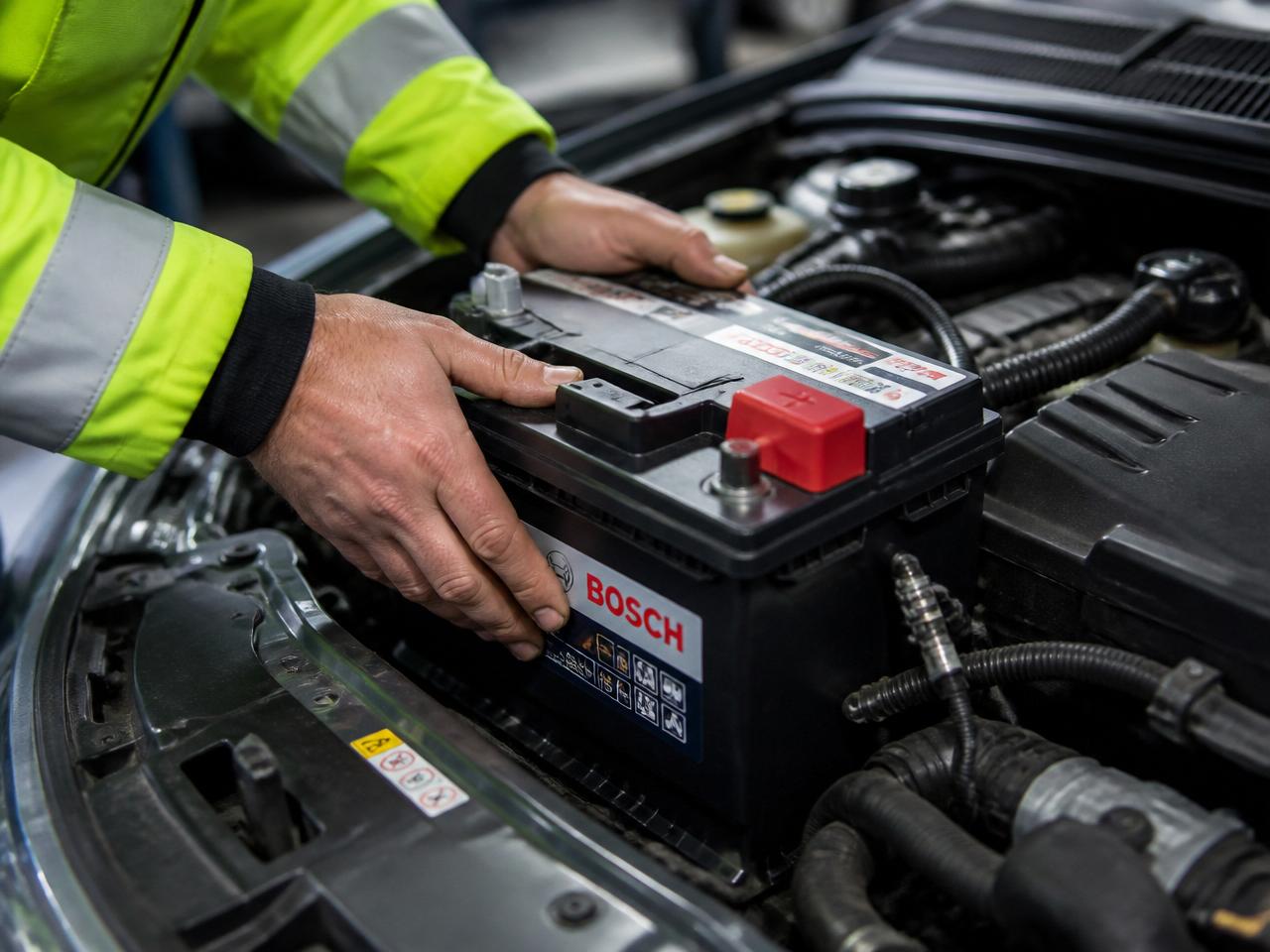
A battery left below 12.0V for weeks starts sulphating — lead sulphate crystals harden on the plates and permanently reduce capacity. Whether that damage is reversible depends almost entirely on how long it sat, and there is a test for that.
Commercial vans park up cold overnight in Studley and refuse to start when the temperature drops. That's parasitic drain plus an ageing battery — a jumpstart on the spot beats a tow every time.
Warwickshire village south of Redditch on the A435. — that means a mix of tight residential streets and industrial estates, and we're set up to work in both without needing a low-loader.
Why standing kills batteries
Vehicles stored outside in B80 through a winter fare worse than garaged ones — cold accelerates the discharge and the sulphation that follows.
Locally that means the streets between Studley and Redditch, with access via M42 J2/J3 and A441 and a practical radius reaching Redditch (~3 mi) and Studley (~3 mi).
Who calls about stored vehicles
Families dealing with a relative's vehicle across Studley.
Domestically, needle-industry heritage terraces and modern estates dominate around here, which shapes how these jobs are accessed and worked.
Bring it back to life properly
Conditioning charge and charge-acceptance testing at your Studley address before anyone talks about a new battery. Ask for a van jumpstart and quote your postcode — B80 is a routine run for us.
Local reference data — Studley
- Nearest major town
- Redditch (~3 miles)
- Local commercial context
- needle manufacturing heritage and distribution
- Postcode districts
- B80
- Reference point
- Warwickshire village south of Redditch on the A435.
- Main routes
- M42 J2/J3 · A441 · A448
- Local authority
- Redditch Borough Council
Recovery charging and acceptance testing
- A recovery or conditioning charge is attempted before any replacement is proposed, since many batteries below 11V will come back if the standing period was short.
- Where the vehicle will go back into storage, we advise on a maintenance charger rather than repeat callouts.
- Battery registration/coding done on the OBD for vans that need it (Sprinter, Crafter, T6, Custom)
- Every van jumpstart finishes with a charging-system reading, so the same fault does not reappear next week.
Long-parked vehicle questions
Q.How do I stop it happening again?
A smart maintenance charger left connected during storage, or a genuine 30-minute drive every fortnight. Ten-minute trips will not do it.
Q.Do you cover Studley and the B80 area for this?
Yes. Studley is inside our routine coverage from Oldbury via M42 J2/J3, roughly 3 miles from Redditch. We cover it alongside Redditch and the surrounding streets.
Q.Do I need to register a new van battery to the ECU?
On Sprinters, Crafters, T6 Transporters and newer Custom Transits — yes. We carry the OBD tool and code it as part of the fit.
Q.What if the van battery keeps going flat every week?
That's parasitic drain — usually a dashcam, tracker or aftermarket electrics wired to permanent live. We do a milliamp draw test and identify the circuit.
Q.How long can a car sit before the battery is ruined?
Roughly two to four weeks before meaningful discharge, and a couple of months before sulphation is likely permanent. Cold shortens both figures.
Q.Will a conditioning charge save it?
Often, if the standing period was measured in weeks. After several months the capacity loss is usually permanent, and the charge acceptance test will show it.
Recent standing-vehicle jobs
Recent job nearby: a car in Studley that had not moved in seven months. Conditioning charge brought it to 12.4V but charge acceptance failed — replaced, and the owner fitted a maintenance charger.
Recent job nearby: a five-week standing vehicle off M42 J2/J3 recovered fully with a conditioning charge and no new battery needed.
Areas we attend
Studley sits about 3 miles from Redditch, and the same van covers Redditch (~3 mi), Studley (~3 mi) and Alvechurch (~4 mi) on the same run.
Why this is safe to book
- We attempt recovery before recommending replacement — a battery sale is not the default outcome.
- Old batteries removed and recycled on every van jumpstart.
How the visit runs
- 1
Phone diagnosis
Van make, model, engine size and symptom — we already know if it's a battery, alternator or starter pattern.
- 2
Recovery charging and acceptance testing
Charge acceptance is measured after conditioning — a battery that will not take charge is finished regardless of what the voltmeter says afterwards.
- 3
Fixed quote
Price agreed before we set off. Includes callout, jumpstart and full electrical health check.
- 4
On-site test
Voltage, load, alternator output at 2000 rpm, parasitic draw. Real numbers, not guesses.
Related pages
- Battery Replacement — vehicle left standing in Studley
- Car Jumpstart — vehicle left standing in Studley
- Hybrid 12V auxiliary battery — van jumpstart in Studley
- Alternator or battery? — van jumpstart in Studley
- Roadside emergency — van jumpstart in Studley
- Vehicle left standing in Redditch (~3 mi)
- Vehicle left standing in Studley (~3 mi)
- Vehicle left standing in Astwood Bank (~3 mi)
- Vehicle left standing across Redditch
- Van Jumpstart in Studley — main page
- All jumpstart services in Studley
The short version
Long-standing vehicles need a charge strategy, not a jump. Test charge acceptance in Studley and you find out in ten minutes whether the battery has a future. For van jumpstart specifically, that means heavy-duty 2000a+ lithium jump pack rated for diesel commercials up to 7.5t
Stranded with a flat battery?
Call now or send a WhatsApp — we'll confirm your quote and dispatch the nearest engineer.