
Mobile battery replacement · Slow crank on cold mornings
Sluggish Winter Starts in Sutton Coldfield — Mobile Battery Replacement
Engine turning over slowly on cold mornings in Sutton Coldfield? Cold cranking capacity fades before a battery dies outright. On-site testing and battery repl
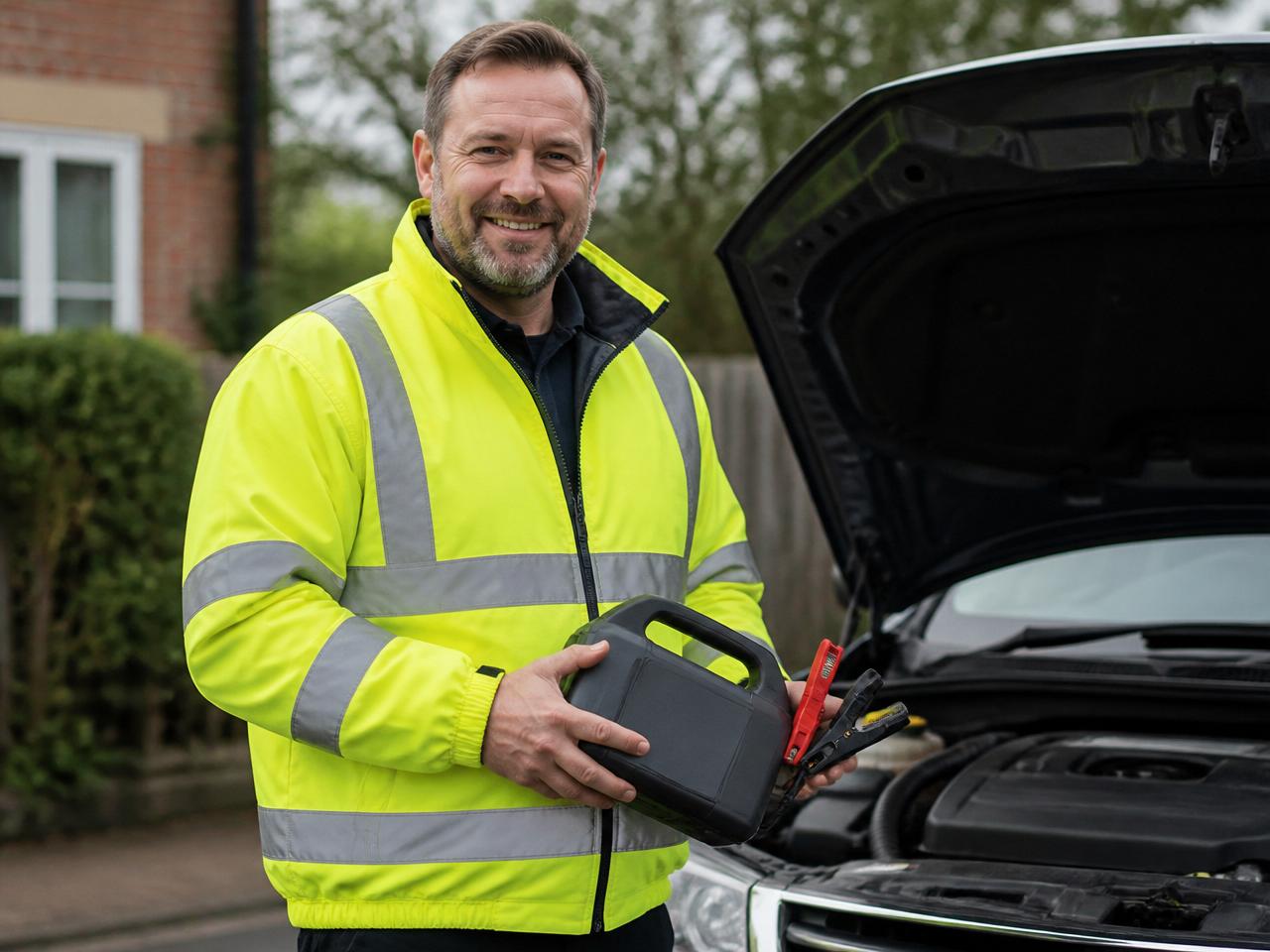
If you have started listening to how your car sounds first thing in the morning, that instinct is right. A dragging crank is a warning with days or weeks of notice, and it is far cheaper to act on than a no-start in a car park.
A cheap battery from a chain retailer in Sutton Coldfield, fitted without OBD registration, will fail early on any car built after 2012. We fit tier-1 batteries and register them to your car properly.
A properly registered AGM battery in a BMW, Audi or VW will last 6–8 years. A flooded battery dropped in without coding, in the same car, will fail in under 2.
Why cold weather exposes a tired battery
We see clusters of these calls after the first hard frost, especially from short-journey drivers whose alternator never gets long enough to top the battery back up.
Locally that means Sutton Coldfield itself plus the neighbourhoods that feed into it, with access via A38 Bassetts Pole and A5127 and a practical radius reaching Erdington (~3 mi) and Boldmere (~1 mi).
Typical callers with this symptom
Drivers of older vehicles on large detached houses who would rather replace on their own terms than be stranded.
Domestically, large detached houses and Edwardian villas dominate around here, which shapes how these jobs are accessed and worked.
Catch it before the frost does
A ten-minute cold cranking test in Sutton Coldfield is cheaper than a morning spent waiting at the kerb. Tell us the vehicle and the symptom and you will get a firm price before anyone sets off.
The tests that predict a winter no-start
- Cranking voltage is watched live — anything dipping below 9.6V while turning over indicates a battery near the end of its usable life.
- Cold cranking amps are tested against the figure printed on the battery label, not against a generic pass mark.
- Fixed quoted price including battery, fitting, coding, recycling and warranty registration
- Every battery replacement finishes with a charging-system reading, so the same fault does not reappear next week.
Cold starting questions
Q.What's the difference between AGM and EFB?
AGM is a fully sealed absorbed-glass-mat battery for premium and stop-start; EFB is an enhanced flooded battery for entry-level stop-start. Fitting the wrong one is a warranty-void job.
Q.Do I really need OBD coding when the new battery goes in?
On post-2012 BMW, Audi, VW, Ford, Vauxhall, Peugeot and Citroen — yes. Without coding, the alternator will overcharge the new battery and kill it in under a year.
Q.My car starts fine in the afternoon — is the battery still bad?
Very likely. Warm batteries deliver far more current than cold ones, so a failing pack can pass at midday and fail at 6am. The cold cranking test settles it.
Q.How long have I got before it strands me?
Once cranking voltage drops under 9.6V regularly, most batteries give a few weeks at best, and less if the weather turns. We give you the actual reading so you can decide.
Q.Would a battery charger fix it instead?
A conditioning charge helps a battery that is merely undercharged. It cannot restore lost plate capacity, which is what causes genuine cold-crank failure.
Q.Do you cover Sutton Coldfield and the B72 area for this?
Yes. Sutton Coldfield is inside our routine coverage from Oldbury via A38 Bassetts Pole, roughly 7 miles from Birmingham. We also cover the surrounding neighbourhoods on the same run.
Recent cold-start jobs nearby
Recent job nearby: an estate car on a driveway off A38 Bassetts Pole, cranking slowly for a week. Rated 640 CCA, tested at 310 — replaced with a matched unit and the slow crank went away entirely.
Recent job nearby: a small city car near Sutton Park that started fine on test but showed a 0.4A parasitic drain from an aftermarket accessory — the real cause of the morning struggle.
Areas we reach quickly from here
As a district hub, Sutton Coldfield is covered alongside its surrounding neighbourhoods, so a slow crank on cold mornings call from any of them routes to the same engineer.
Why this is safe to book
- We quote the rated CCA against the measured CCA so the decision is yours, based on a number.
- Fixed prices agreed before dispatch — no callout fee just to open the bonnet in B72.
How the visit runs
- 1
Vehicle lookup
By reg on the phone — we confirm the exact OEM battery spec before quoting.
- 2
Fixed all-in price
Battery, fitting, coding, recycling, warranty — one number on the phone.
- 3
The tests that predict a winter no-start
Cold cranking amps are tested against the figure printed on the battery label, not against a generic pass mark.
- 4
Driveway fit
Memory saver in, old battery out, new one in and terminals torqued to spec.
Related pages
- Fleet & Business Jumpstart — slow crank on cold mornings in Sutton Coldfield
- 24/7 Emergency Jumpstart — slow crank on cold mornings in Sutton Coldfield
- Night and early hours — battery replacement in Sutton Coldfield
- Alternator or battery? — battery replacement in Sutton Coldfield
- Vehicle left standing — battery replacement in Sutton Coldfield
- Slow crank on cold mornings in Erdington (~3 mi)
- Slow crank on cold mornings in Boldmere (~1 mi)
- Slow crank on cold mornings in Streetly (~3 mi)
- Slow crank on cold mornings in Boldmere
- Battery Replacement in Sutton Coldfield — main page
- All jumpstart services in Sutton Coldfield
The short version
The useful thing about winter starting trouble is that it is predictable. Test the cold cranking figure, compare it to the label, and act while the car still starts. If you would rather plan it than react to it, a battery replacement can be booked for a time that suits.
Stranded with a flat battery?
Call now or send a WhatsApp — we'll confirm your quote and dispatch the nearest engineer.