
Mobile van jumpstart · Slow crank on cold mornings
Slow Cranking On Cold Mornings — Van Jumpstart, Cradley Heath
Engine turning over slowly on cold mornings in Cradley Heath? Cold cranking capacity fades before a battery dies outright. On-site testing and van jumpstart,
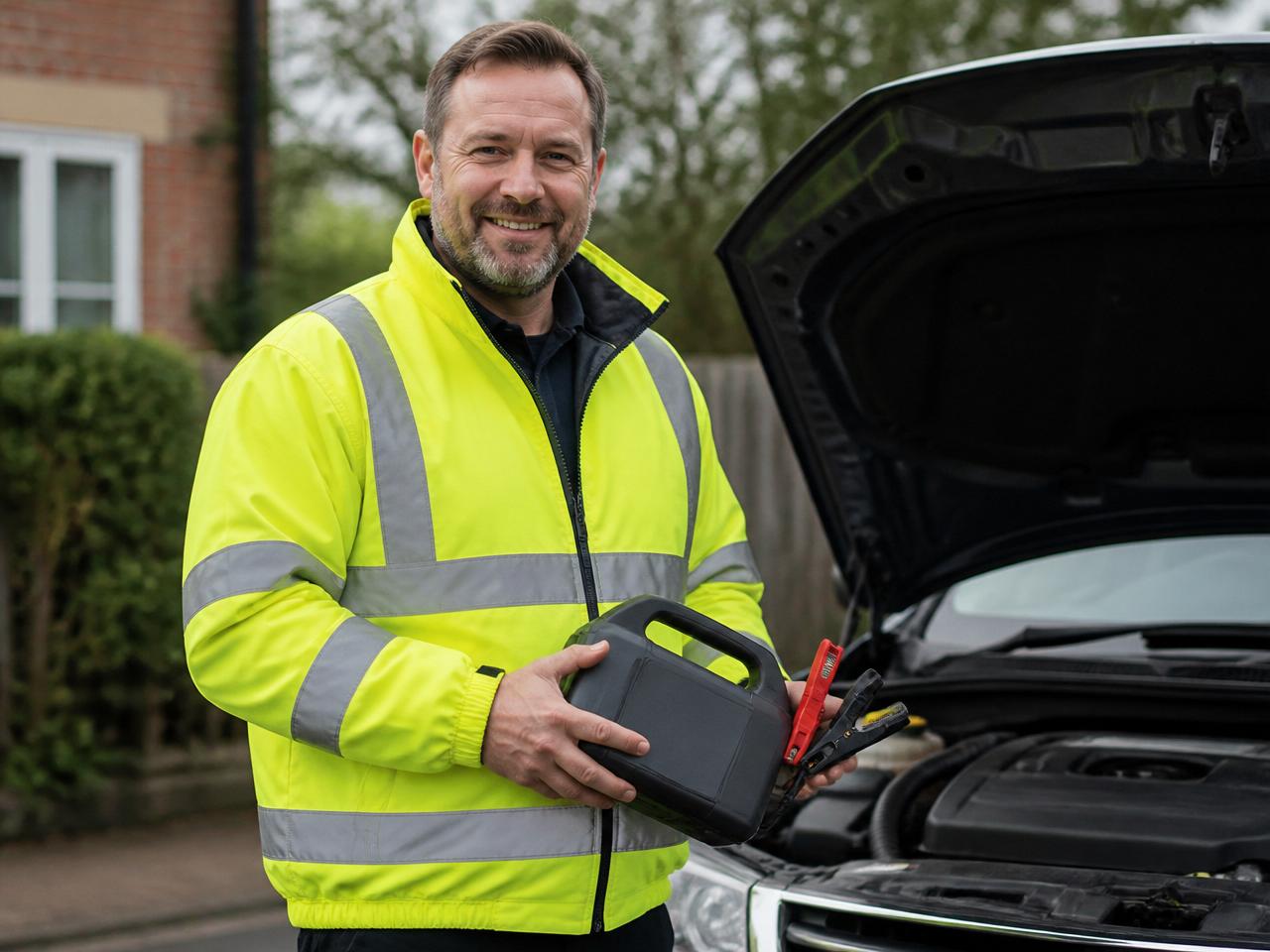
A battery rarely dies in one go. It loses cold cranking amps gradually, and the first sign is a starter that drags for a second longer than it used to on a frosty morning — while starting perfectly at lunchtime.
Commercial vans park up cold overnight in Cradley Heath and refuse to start when the temperature drops. That's parasitic drain plus an ageing battery — a jumpstart on the spot beats a tow every time.
Historic chainmaking town on the Stour with dense terraced streets and canal infrastructure. — that means a mix of tight residential streets and industrial estates, and we're set up to work in both without needing a low-loader.
Typical callers with this symptom
Drivers of older vehicles on chainmaker-era terraces who would rather replace on their own terms than be stranded.
Domestically, chainmaker-era terraces and canal-side workshops dominate around here, which shapes how these jobs are accessed and worked.
Why cold weather exposes a tired battery
We see clusters of these calls after the first hard frost, especially from short-journey drivers whose alternator never gets long enough to top the battery back up.
Locally that means Cradley Heath itself plus the neighbourhoods that feed into it, with access via A459 and A4100 and a practical radius reaching Old Hill (~1 mi) and Blackheath (~1 mi).
Recent cold-start jobs nearby
Recent job nearby: an estate car on a driveway off A459, cranking slowly for a week. Rated 640 CCA, tested at 310 — replaced with a matched unit and the slow crank went away entirely.
Recent job nearby: a small city car near Cradley Heath that started fine on test but showed a 0.4A parasitic drain from an aftermarket accessory — the real cause of the morning struggle.
Catch it before the frost does
A ten-minute cold cranking test in Cradley Heath is cheaper than a morning spent waiting at the kerb. We route in via A459, roughly 2 miles out from Halesowen.
The tests that predict a winter no-start
- Cranking voltage is watched live — anything dipping below 9.6V while turning over indicates a battery near the end of its usable life.
- Cold cranking amps are tested against the figure printed on the battery label, not against a generic pass mark.
- Battery voltage and cold-cranking amps measured with a proper Midtronics-style tester, not a cheap voltmeter
- Van Jumpstart work here is judged against the vehicle's own specification rather than a generic pass mark.
How the visit runs
- 1
Phone diagnosis
Van make, model, engine size and symptom — we already know if it's a battery, alternator or starter pattern.
- 2
Fixed quote
Price agreed before we set off. Includes callout, jumpstart and full electrical health check.
- 3
On-site test
Voltage, load, alternator output at 2000 rpm, parasitic draw. Real numbers, not guesses.
- 4
The tests that predict a winter no-start
Parasitic draw is measured where the pattern suggests overnight drain rather than genuine age.
Local reference data — Cradley Heath
- Local authority
- Sandwell Metropolitan Borough Council
- Typical property
- chainmaker-era terraces and canal-side workshops
- Local commercial context
- chainmaking heritage and engineering
- Service covered here
- Van Jumpstart
- Area type
- Town / district hub
- County
- West Midlands
Areas we reach quickly from here
Cradley Heath sits about 2 miles from Halesowen, and the same van covers Old Hill (~1 mi), Blackheath (~1 mi) and Netherton (~2 mi) on the same run.
Cold starting questions
Q.Would a battery charger fix it instead?
A conditioning charge helps a battery that is merely undercharged. It cannot restore lost plate capacity, which is what causes genuine cold-crank failure.
Q.Do you cover Cradley Heath and the B64 area for this?
Yes. Cradley Heath is inside our routine coverage from Oldbury via A459, roughly 2 miles from Halesowen. We also cover the surrounding neighbourhoods on the same run.
Q.Can you jumpstart a large diesel van?
Yes — our packs are rated for LCVs and small trucks up to around 7.5 tonnes. A booster designed for petrol cars won't do it; ours will.
Q.What if the van battery keeps going flat every week?
That's parasitic drain — usually a dashcam, tracker or aftermarket electrics wired to permanent live. We do a milliamp draw test and identify the circuit.
Q.My car starts fine in the afternoon — is the battery still bad?
Very likely. Warm batteries deliver far more current than cold ones, so a failing pack can pass at midday and fail at 6am. The cold cranking test settles it.
Q.How long have I got before it strands me?
Once cranking voltage drops under 9.6V regularly, most batteries give a few weeks at best, and less if the weather turns. We give you the actual reading so you can decide.
Related pages
- Battery Replacement — slow crank on cold mornings in Cradley Heath
- Car Jumpstart — slow crank on cold mornings in Cradley Heath
- Driveway and home callout — van jumpstart in Cradley Heath
- Hybrid 12V auxiliary battery — van jumpstart in Cradley Heath
- Taxi and private hire — van jumpstart in Cradley Heath
- Slow crank on cold mornings in Old Hill (~1 mi)
- Slow crank on cold mornings in Blackheath (~1 mi)
- Slow crank on cold mornings in Netherton (~2 mi)
- Slow crank on cold mornings in Quarry Bank
- Van Jumpstart in Cradley Heath — main page
- All jumpstart services in Cradley Heath
The short version
The useful thing about winter starting trouble is that it is predictable. Test the cold cranking figure, compare it to the label, and act while the car still starts. Either way you get the readings, the reasoning and a working vehicle before we leave.
Stranded with a flat battery?
Call now or send a WhatsApp — we'll confirm your quote and dispatch the nearest engineer.